Visit the websites of several security companies in the same market and you may notice a pattern.
Many offer access control, video surveillance, alarm systems, monitoring, system integration, maintenance, and related security services. Their websites often use similar language around reliability, experience, technology, and customer service.
From the security company’s perspective, there may be significant differences in technical expertise, project experience, responsiveness, industry knowledge, and how systems are designed and supported.
The problem is that prospective customers cannot always see those differences.
For commercial security companies in particular, standing out is less about inventing a service nobody else offers and more about making it easier for the right buyer to understand why your company is the better fit for their specific situation.
That requires stronger positioning, proof, useful expertise, and a better path from first impression to sales conversation.
Quick Answer
Security companies can stand out in a crowded market by being more specific about who they serve, the problems they solve, and how they approach projects rather than relying on generic lists of security services.
A company that clearly demonstrates relevant experience, explains complex security decisions, shows credible proof, and communicates consistently across its website, search presence, LinkedIn, and sales process gives potential buyers more reasons to remember and evaluate it.
Differentiation does not necessarily require different services. It requires making meaningful differences easier for buyers to recognize.
Key Takeaways
- Listing services is not the same as explaining why a buyer should choose your company.
- Security companies can differentiate through market focus, expertise, project approach, responsiveness, proof, and customer experience.
- Commercial buyers may research a security provider before speaking with its sales team, making digital credibility important earlier in the buying process.
- Educational content can demonstrate expertise more effectively than repeatedly saying a company is experienced.
- Marketing should reflect the buyers and projects a security company actually wants, rather than trying to appeal to everyone.
- Generating an inquiry is only part of the process. Qualification, response, follow-up, proposals, and sales communication can reinforce or weaken the company’s positioning.
Why Do So Many Security Companies Look the Same Online?
Security companies frequently compete using similar categories of products and services.
Two integrators might both install access control systems. Several companies in the same city might provide surveillance, intrusion detection, monitoring, and system maintenance.
That makes a simple list of services a weak differentiator.
Consider these statements:
We provide innovative security solutions.
We offer reliable security services tailored to your needs.
We use leading technology to protect what matters most.
None of those statements is necessarily wrong.
The problem is that almost any security company could say them.
A facility manager, property manager, operations director, developer, or business owner comparing several providers still has to determine what actually makes one company different.
Good positioning helps answer that question before the sales conversation begins.
What Does Differentiation Actually Mean for a Security Company?
Differentiation does not mean finding a clever slogan.
It means giving a potential customer clear reasons to see your company as particularly relevant to the problem they are trying to solve.
Those reasons can come from several areas.
A security company might have deeper experience with multi-site commercial properties. Another might understand complex access control integrations. One may specialize in serving property managers, while another has substantial experience with industrial facilities.
Even the way a company works can become meaningful.
How does it assess a site?
How does it approach system design?
How does it communicate during installation?
How are existing systems considered?
What happens after installation?
How does the company handle ongoing support?
These are more useful differentiators than simply saying, “We care about our customers.”
Start With the Customers You Actually Want
Trying to market a security company to everyone can make the message less relevant to anyone.
A company pursuing commercial property management contracts has a different buyer from one focused primarily on residential security.
Even within commercial security, audiences vary.
A property manager may care about managing access across multiple buildings.
A facility director might be evaluating whether existing systems can support operational requirements.
A construction or development team may need security planning to fit within a larger project involving other contractors and systems.
An organization operating several locations may be thinking about standardization and ongoing management.
Marketing becomes more useful when it reflects these actual buying situations.
Instead of:
Commercial Security Solutions
a company might build content around:
Access Control for Multi-Site Commercial Properties
or:
Security System Planning for Property Managers
The service has not changed.
The relevance has.
Your Website Should Explain Problems, Not Just Products
A common security website structure revolves almost entirely around product categories:
- Access control
- CCTV
- Alarm systems
- Intercoms
- Monitoring
- Security cameras
Those pages are useful because prospective customers need to know what the company provides.
But they should not be the whole story.
A buyer is rarely thinking only about the name of a technology.
They may be thinking:
How do we manage employee access across several buildings?
Can we modernize our current security system without replacing everything?
How should access control and video surveillance work together?
What should we consider when choosing a security integrator?
How do we manage security as our company adds locations?
Content built around those questions gives the security company an opportunity to demonstrate how it thinks, not merely what it sells.
That difference matters because expertise is difficult to communicate through a service list alone.
Show Expertise Instead of Claiming It
Almost every company says it is experienced.
Fewer companies make that experience visible.
A security business can demonstrate expertise through educational content that explains decisions buyers genuinely face.
For example:
When Should a Business Upgrade Its Access Control System?
An article could discuss signs that an existing system may deserve review, questions to ask before upgrading, integration considerations, and how business requirements affect the decision.
What Should Property Managers Consider When Comparing Security Providers?
Rather than writing another page about cameras, explain evaluation criteria such as relevant experience, system compatibility, implementation planning, support, communication, and documentation.
What Should Businesses Consider Before Adding More Security Cameras?
This gives the company an opportunity to discuss objectives, placement considerations, existing infrastructure, system management, and other planning questions without turning the article into an advertisement.
Good educational content does something an “About Us” page cannot.
It lets prospective buyers experience some of the company’s expertise before contacting sales.
Thought Leadership Can Matter Before the Sales Conversation
For B2B security companies, LinkedIn can also provide a place to demonstrate that expertise.
Research commissioned by LinkedIn and Edelman has found that business decision-makers consume thought leadership and that strong thought leadership can influence perceptions of an organization and purchasing decisions. The broader lesson for security firms is not that posting on LinkedIn automatically generates contracts. It is that useful professional insight can influence how a company is perceived before direct sales engagement begins.
Security companies have plenty to talk about without turning every post into a promotion.
A project manager could explain a common mistake businesses make when planning access control.
Company leaders could discuss what property managers should ask during a security assessment.
Technicians could explain, in appropriate non-sensitive terms, why planning and integration matter on complex projects.
Businesses could also comment on broader developments affecting commercial security and facilities management.
This creates a different impression from a company whose LinkedIn activity consists almost entirely of product promotions.
Amber 90 has previously discussed using LinkedIn content to reach relevant decision-makers and the role paid amplification can play when useful organic content is already performing.
Proof Should Be More Specific Than “Trusted by Businesses”
Trust is particularly important in security, but generic claims of trust are difficult for prospective customers to evaluate.
Proof can take several forms.
Relevant Project Examples
Where confidentiality and security considerations allow, explain the type of challenge, general approach, and project scope without disclosing sensitive system details.
For example:
A multi-location organization needed a more consistent approach to managing access across several properties.
That tells a prospective buyer much more than:
We install access control systems.
Industry Experience
If a company genuinely has experience serving commercial property, construction, industrial facilities, retail, healthcare, or another market, make that experience easy to find.
Certifications and Partnerships
Relevant, current certifications, licences, manufacturer relationships, and professional affiliations can help buyers verify capabilities where appropriate.
Customer Feedback
Testimonials and reviews can add useful context when they are authentic and specific enough to help prospective customers understand the experience of working with the company.
The goal is not to cover the website in badges and claims.
It is to reduce uncertainty.
Your Sales Process Is Part of Your Differentiation
A company can have excellent positioning and still undermine it once an inquiry arrives.
Imagine two commercial security integrators that appear equally capable.
A prospective customer contacts both.
Company A acknowledges the inquiry, asks relevant questions, establishes a clear next step, records the opportunity, and follows up when promised.
Company B responds several days later with a generic email and then loses track of the conversation after sending information.
Even if Company B has excellent technical capabilities, the buyer has already experienced a meaningful difference between the two businesses.
This is why Amber 90 looks at marketing as a connected process:
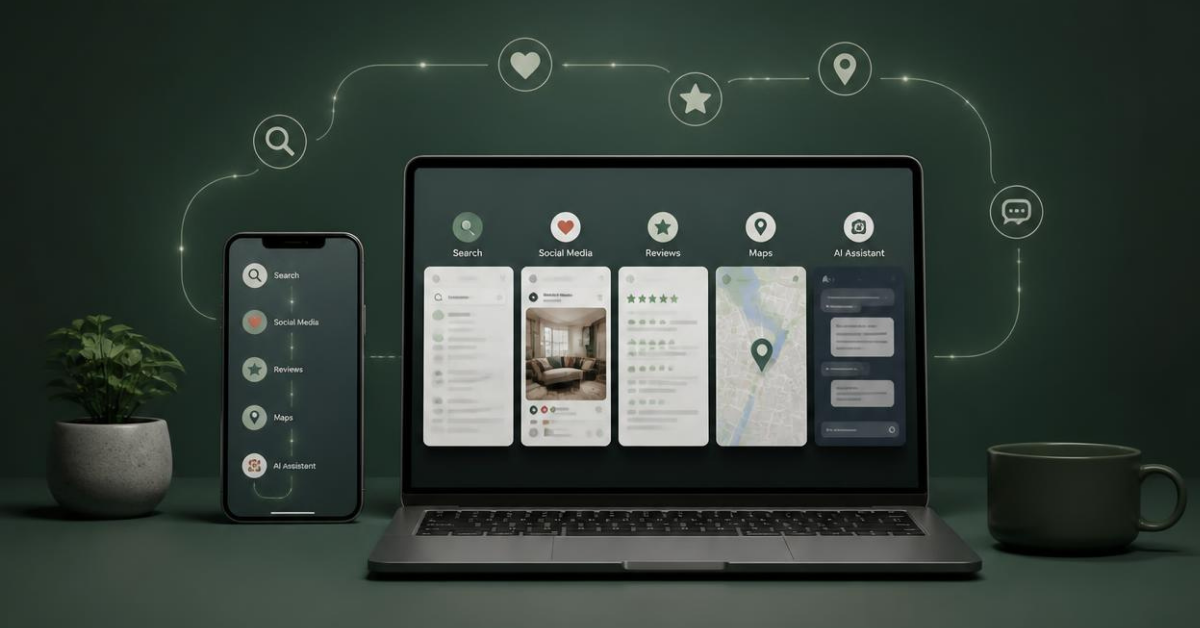
Visibility → Discovery → Inquiry → Lead Response → Follow-Up → Sales Opportunity → Business Outcome
The marketing promise should survive the handoff to sales.
If a company positions itself as organized, responsive, and professional, the inquiry and sales experience should reinforce that message.
Speed Matters, but Context Matters Too
Lead response is often discussed as though the only objective is replying as quickly as possible.
Speed can matter, particularly for high-intent inquiries, but response quality matters as well.
A commercial security inquiry may require qualification.
What type of property is involved?
Is the customer looking for a new installation, expansion, service, or replacement?
How many locations are involved?
Who is participating in the decision?
What problem is prompting the project?
The purpose of the first response should not always be to sell immediately. It may be to understand enough about the opportunity to determine the appropriate next conversation.
Automation can help acknowledge inquiries, route leads, create reminders, and maintain records.
Human involvement remains important when the conversation requires technical understanding, judgement, or relationship building.
A Practical Security Company Example
Consider two hypothetical security integrators competing for similar commercial projects.
Both provide video surveillance and access control.
The first company’s website says:
Leading Commercial Security Solutions
It lists products, manufacturers, and a phone number.
By comparison, the second company’s website explains the industries it works with, common problems it solves, how its assessment process works, and what buyers should consider when planning an integrated security project.
Its LinkedIn content includes practical commentary from people inside the business.
Educational articles on its website answer questions facility and property managers might research.
When an inquiry arrives, the prospect receives a clear acknowledgement and the opportunity is assigned for follow-up.
Nothing about this guarantees the second company wins the project.
It does, however, give the buyer more information with which to evaluate the company.
That is the practical purpose of differentiation.
Should Security Companies Compete on Price?
Price will always matter to some buyers.
Making price the centre of the company’s positioning, however, can make differentiation difficult when competitors can respond with similar discounts.
For commercial security projects, the buyer may also be evaluating factors such as:
- Relevant project experience
- Technical approach
- Equipment suitability
- Integration requirements
- Communication
- Implementation planning
- Support
- Responsiveness
- Long-term system requirements
A lower quote can be attractive, but it does not automatically make two proposals equivalent.
Marketing should help prospective customers understand the other criteria worth considering before the conversation becomes purely about price.
What Should Security Companies Measure?
Marketing performance should be evaluated beyond impressions and raw lead counts.
A security company pursuing commercial opportunities may generate fewer inquiries than a consumer-focused business, but individual opportunities can involve longer sales cycles and several stakeholders.
Useful measurements can include qualified inquiries, which indicate whether marketing is attracting the right types of potential customers; source of opportunity, which shows whether inquiries originated from organic search, advertising, LinkedIn, referrals, or another channel; lead response and follow-up, which helps identify whether opportunities are receiving consistent attention; and sales progression, which tracks how many qualified inquiries become meetings, assessments, proposals, and eventually customers.
Cost per lead can still be useful in paid campaigns, but it should be interpreted alongside lead quality. A cheap lead that has little connection to the services or market the company wants may have limited business value.
This connects with Amber 90’s broader work around the difference between filling a pipeline and turning suitable opportunities into business outcomes.
Common Differentiation Mistakes Security Companies Make
One common mistake is saying everything instead of choosing something. If every service, industry, technology, and customer type receives equal emphasis, prospective buyers may struggle to understand where the company is strongest.
Another is confusing branding with positioning. A redesigned logo and polished website can improve presentation, but they do not automatically explain why a customer should choose the business.
Security firms can also rely too heavily on manufacturer language. If several integrators sell similar systems and repeat similar manufacturer descriptions, their websites can become difficult to distinguish.
Finally, companies sometimes invest heavily in generating leads while overlooking what happens next. If inquiries are poorly qualified, slowly answered, or inconsistently followed up, increasing advertising spend may simply send more opportunities into the same weak process.
How Can a Security Company Build a Stronger Position?
A useful starting point is to answer a few practical questions:
- Which customers and projects do we most want?
- What problems bring those customers to us?
- What experience do we have that is particularly relevant to those problems?
- What do we do differently during assessment, planning, installation, communication, or support?
- What evidence can we responsibly show?
- What questions do prospects repeatedly ask before buying?
- Does our website communicate these differences clearly?
- Does our sales process deliver the same experience our marketing promises?
The answers can influence website messaging, SEO, content, LinkedIn activity, advertising, sales materials, and follow-up.
Differentiation becomes much stronger when those pieces tell the same story.
How Amber 90 Can Help Security Companies
Amber 90 already works across digital marketing areas relevant to security companies, including website strategy, SEO, paid advertising, LinkedIn marketing, content, and lead management.
For a security business, the first question should not necessarily be, “Which advertising platform should we spend more money on?”
A better starting point may be:
Are we giving the right buyers a clear reason to choose us?
From there, marketing can be built around the company’s actual strengths, target customers, and sales process.
Amber 90’s existing guide comparing Meta Ads and LinkedIn Ads for security firms provides additional information for companies deciding how different advertising channels fit into that strategy.
If your security company offers strong services but still looks too similar to competitors online, Amber 90 can help review your positioning, website, visibility, lead generation, and follow-up process to identify areas worth improving.
Frequently Asked Questions
How can a security company differentiate itself from competitors?
Start by identifying the customers, projects, and problems where the company has meaningful experience. Then make those strengths visible through specific website messaging, educational content, relevant proof, professional insight, and a sales experience that supports the same positioning.
What should a security company’s website include?
Along with clear service information, a useful security website can explain industries served, common customer problems, the company’s approach, relevant experience, educational resources, appropriate proof, and clear ways to make contact.
Is SEO useful for commercial security companies?
SEO can help security companies become discoverable when potential customers research services, problems, providers, and related questions. Results depend on competition, website quality, relevance, authority, location, and other factors, so search visibility cannot be guaranteed.
Should security companies use LinkedIn?
LinkedIn can be particularly relevant for B2B security companies that want to reach or build familiarity with professional audiences. The platform can support thought leadership, company visibility, professional networking, organic content, and paid campaigns, depending on the audience and objective.
Should a security company use Google Ads, LinkedIn Ads, or Meta Ads?
The appropriate platform depends on the target customer and campaign objective. Google can capture existing search demand, LinkedIn can provide professional and company-level B2B targeting, while Meta can support broader awareness and retargeting strategies. Amber 90’s existing comparison of Meta and LinkedIn Ads explores this specifically for security firms.
What content should security companies post?
Useful content can address real buyer questions, project considerations, industry developments, common misconceptions, system planning, integration, maintenance, and lessons that demonstrate expertise without revealing sensitive security details.
How important are case studies for security marketing?
Case studies can help prospective customers understand relevant experience when they are specific enough to demonstrate the type of problem and approach involved. Security companies should avoid publishing information that could expose confidential customer details or sensitive system information.
Is getting more security leads always better?
Not necessarily. Lead volume should be evaluated alongside quality, fit, response, sales progression, acquisition cost, and eventual business outcomes. More inquiries have limited value if most are unrelated to the projects the company wants or are not managed effectively.
Conclusion
Security companies do not necessarily need completely different services to stand apart.
They need to make their meaningful differences visible.
A commercial buyer should be able to understand who the company serves, what it knows, how it approaches projects, what evidence supports its claims, and what working with the company may be like.
That message should remain consistent from Google and LinkedIn through the website, inquiry, follow-up, assessment, and proposal process.
When competitors offer similar services, clarity becomes an advantage.
The company that explains its relevance most convincingly gives buyers something more useful to compare than a list of cameras, access control products, and generic claims about service.
If your security company is struggling to communicate why buyers should choose you over another integrator, Amber 90 can help review how your positioning, digital visibility, lead generation, and follow-up process work together.
Sources Referenced
The article draws on Amber 90 Insights for existing coverage and topic differentiation, including Amber 90’s security advertising research.
LinkedIn and Edelman’s B2B thought-leadership research was used for context on how professional content can influence decision-maker perceptions and purchasing behaviour.
Amber 90’s existing articles on LinkedIn content promotion and pipeline conversion were also reviewed to connect positioning with visibility and what happens after an inquiry enters the sales process.